
A short history of the South Adelaide Football Club
Quick Facts
League Premierships11
Reserves Premierships3
Women's Premierships4
Junior Premierships6
Magarey Medalists8
SANFLW Best and Fairest 1
Senior Players (Men)1866
Senior Players (Women)142
The South Adelaide Football Club was established in April 1876 by Charles Cameron Kingston, who would later become Premier of the state. Created for the purpose of becoming Adelaide’s new ‘city club’, it was called ‘South Adelaide’ because the geography of Adelaide at the time was confined to two neat halves divided by the river, where the southern half was the city.
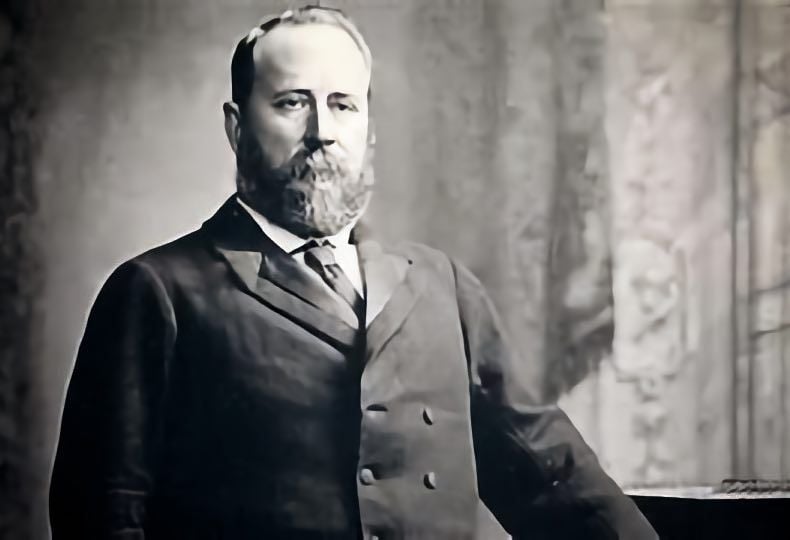
Charles Cameron Kingston, founder of the South Adelaide Football Club in 1876, Premier of South Australia 1893-1899, and a founding father of Australian federation.
When we were Kings
South was a commanding presence in early South Australian football. It won six premierships in the 1890s alone. However, 1899 saw the introduction of the Electorate System, whereby clubs could only call upon players who resided in their allocated district. South lost its star players to other clubs and, left with only a small recruiting zone for itself, future premiership success proved to be elusive.
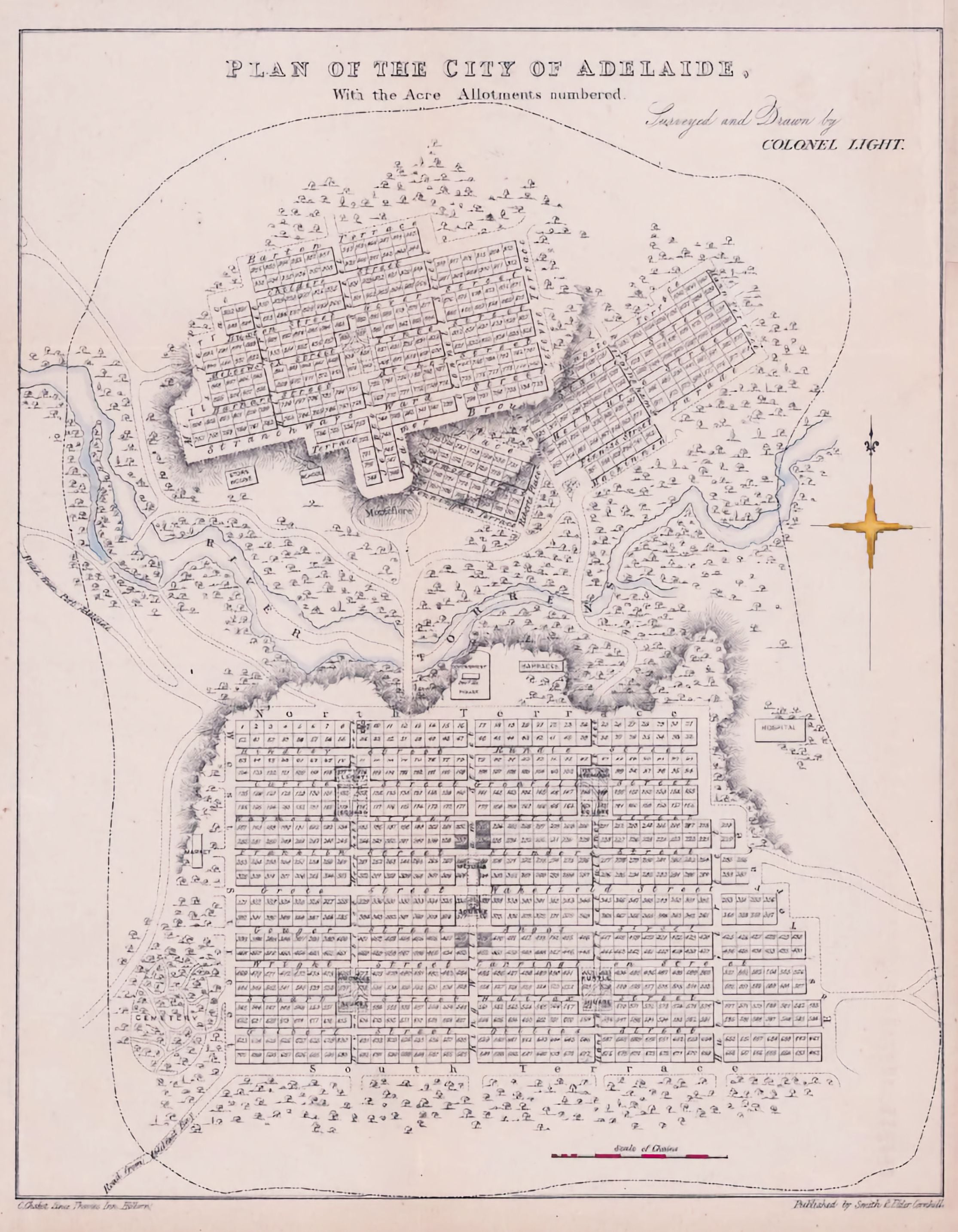
Colonel William Light’s Plan of the City Adelaide, showing North Adelaide and South Adelaide.
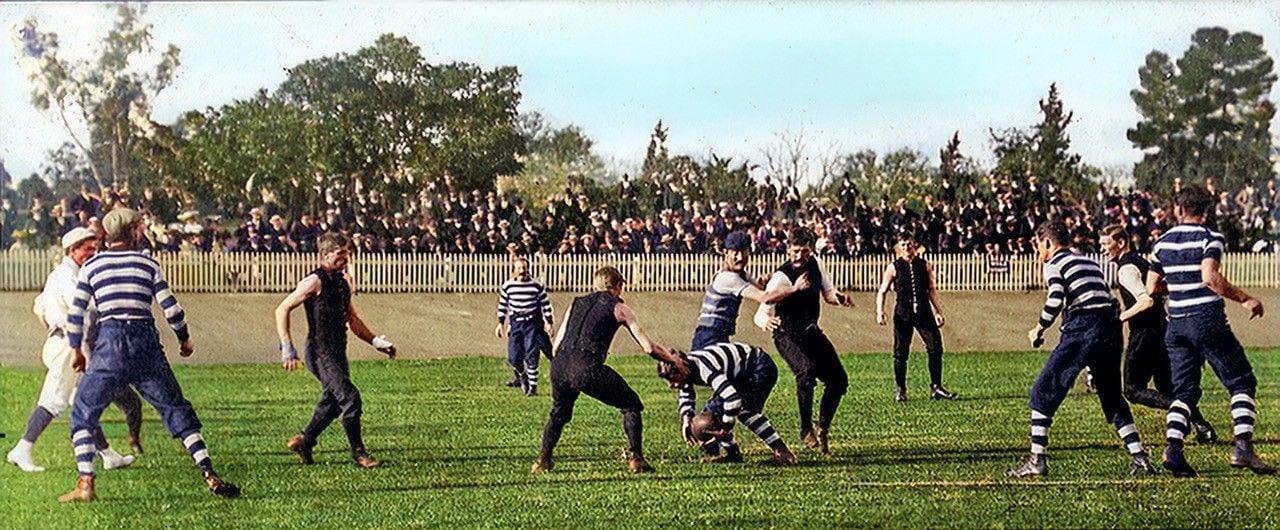
South Adelaide v Port Adelaide at Adelaide Oval, Round 2, Saturday 20 May 1905. Left-to-right: H. Carter (umpire), Alexander Moreton (South Player #307), R. James (Port), Jack Tierney (South Player #394), E. Strawns (Port), George Wallace (South Player #395- with the ball), W. Huston (South Player #360), A. Gosling (Port), J. Fletcher (Port), J. Carroll (South Player #390), P. Dempster (Port), Wally O’Connell (South Player #336).
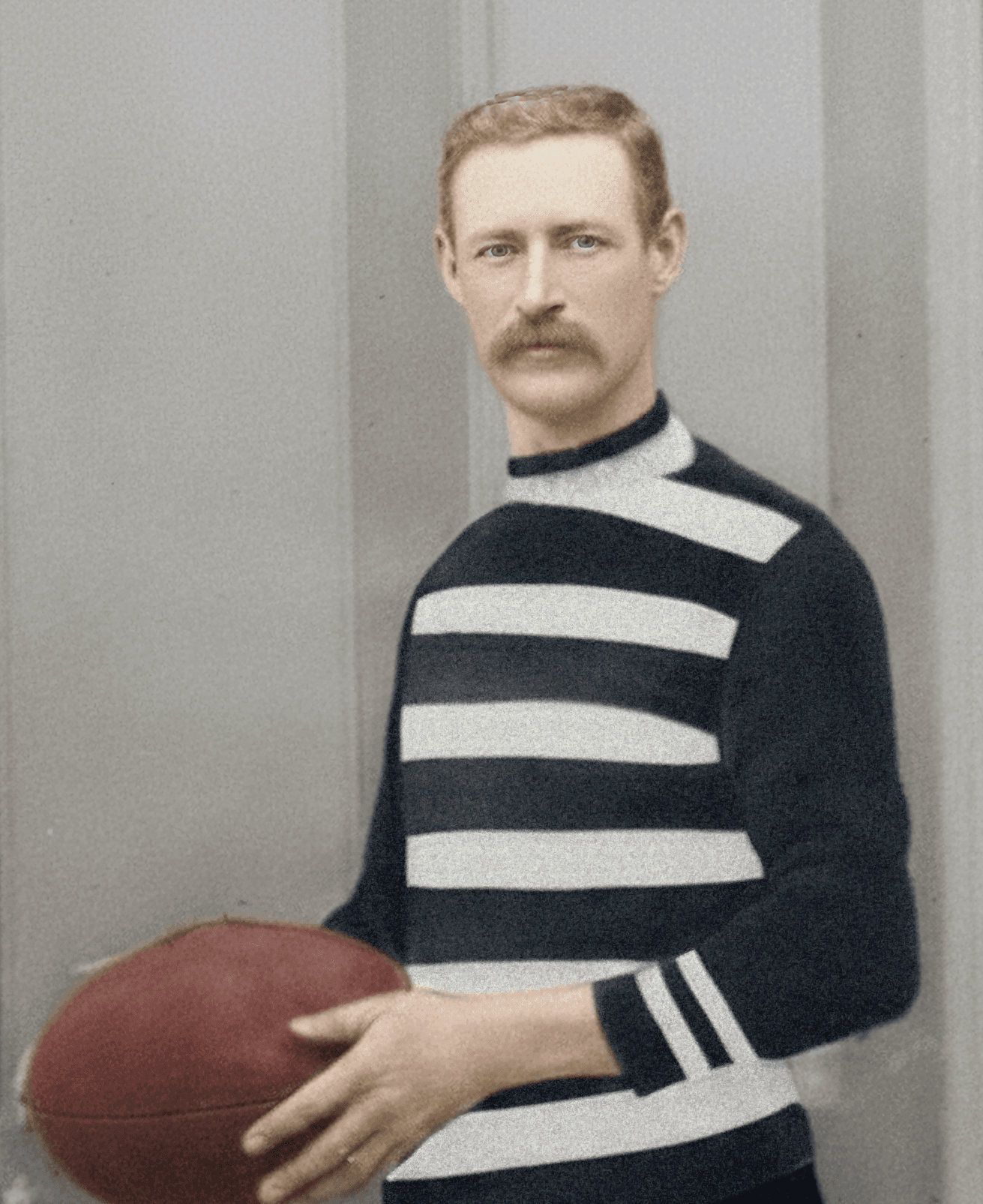
John (Jack) ‘Dinny’ Reedman, South Adelaide Player #204. Before the role of ‘çoach’ came into being, Reedman, as club captain, led South to six premierships in the 1890s. He pioneered running, flow-on football and the concept of the loose man, which was later adopted around the country. As a state cricketer who also played one Test for Australia, as well as a champion swimmer, he is a true great among South Australian sportsmen and leaders. Following his death in 1924, a drinking fountain memorial was built in his honour in Pennington Gardens outside Adelaide Oval, where it still stands.
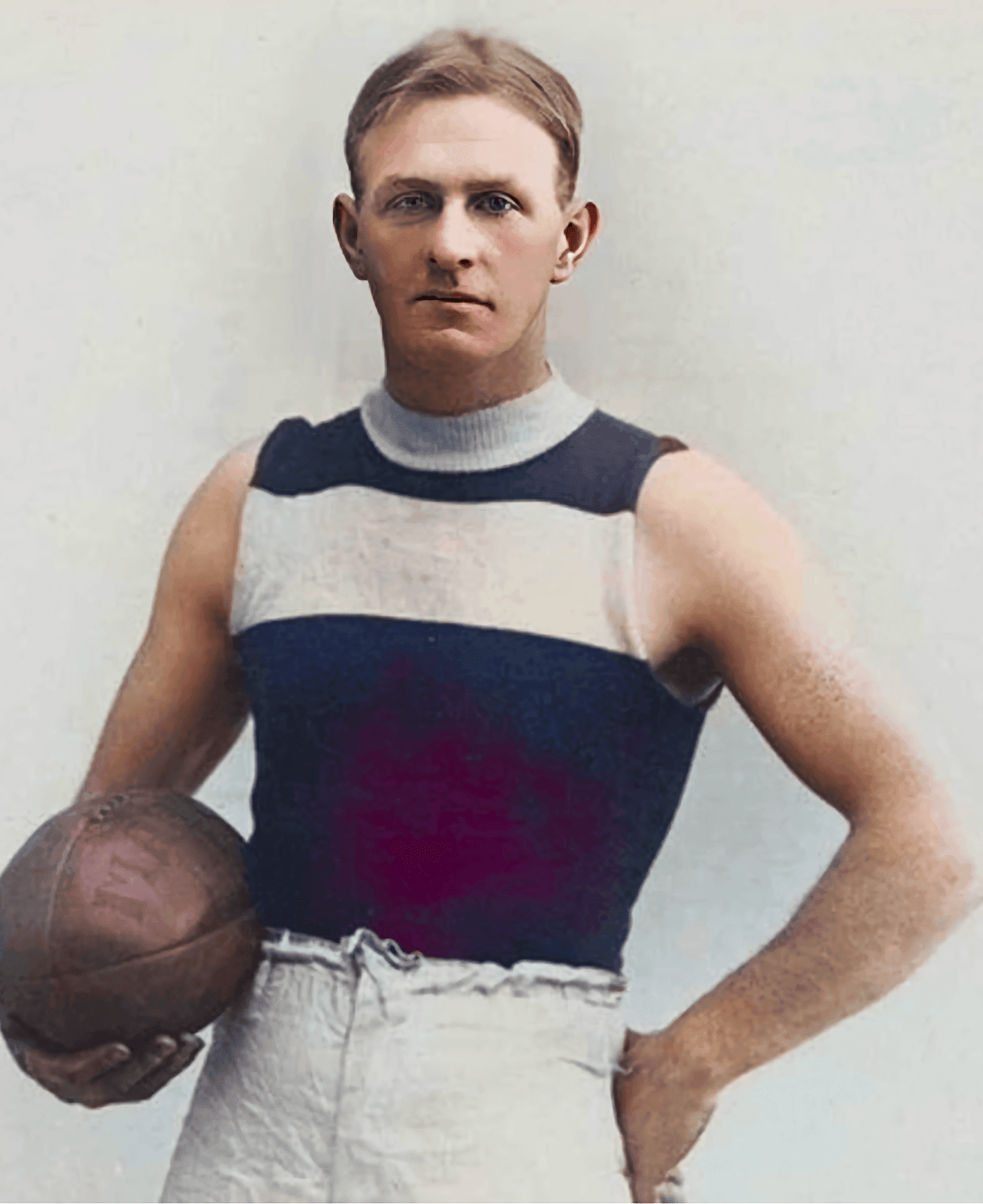
Jack Tredrea, South Adelaide Player #380. Jack Tredrea cut an iconic image as an Australian footballer. Having debuted in 1903, he captained South from 1910 to 1915 and was vice-captain of the South Australian team at successive national carnivals. He was a tough player who, when he playing days were over, famously explained, ‘I put plenty of ginger into my play because I do not believe in making a parlour game of the grand Australian pastime’. He was revered even in Melbourne. Victorian football followers were of the view that ‘no South Australian side was truly representative without Tredrea’, whilst Collingwood ruckman, Dick Lee, had such respect for Tredrea that he arranged to have a photo of him hung in the Collingwood boardroom, where it remained until the Second World War.
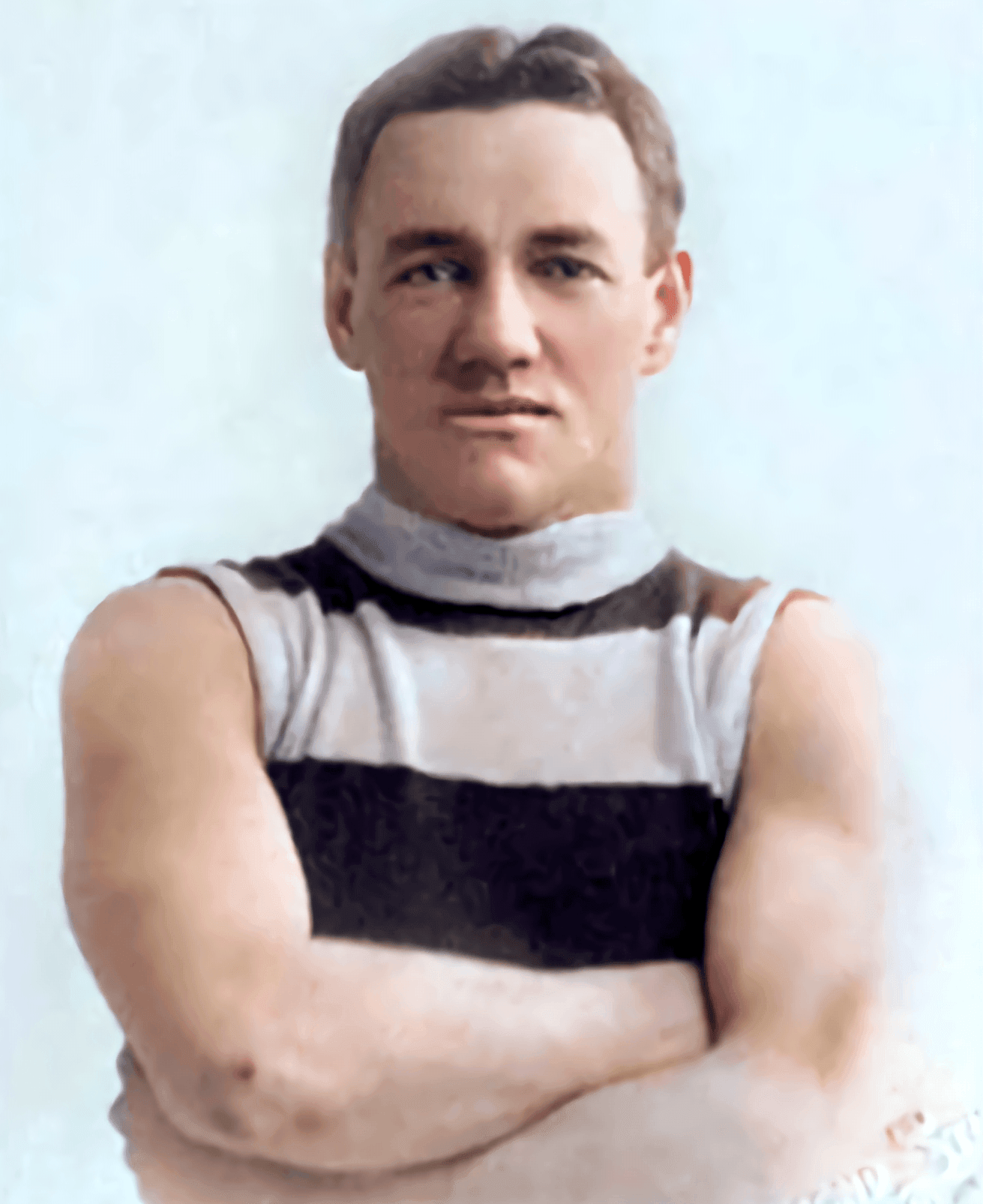
Dan Moriarty, South Player #513. Moriarty was a triple Magarey Medallist, in 1919, 1920 and 1921. He is still the only player to ever receive the honour in three consecutive years.
Glory Days
Brilliant country recruiting led to premierships in 1935 and 1938. Another came in 1964 when South’s bottom-to-top triumph under playing coach Neil Kerley captured the imagination of the state. The late 1970s was also a memorable era. Although South did not win a League premiership, losing the 1979 Grand Final, the club won stirring National Night Series premierships in 1978 and 1979 under coach Haydn Bunton Jnr..
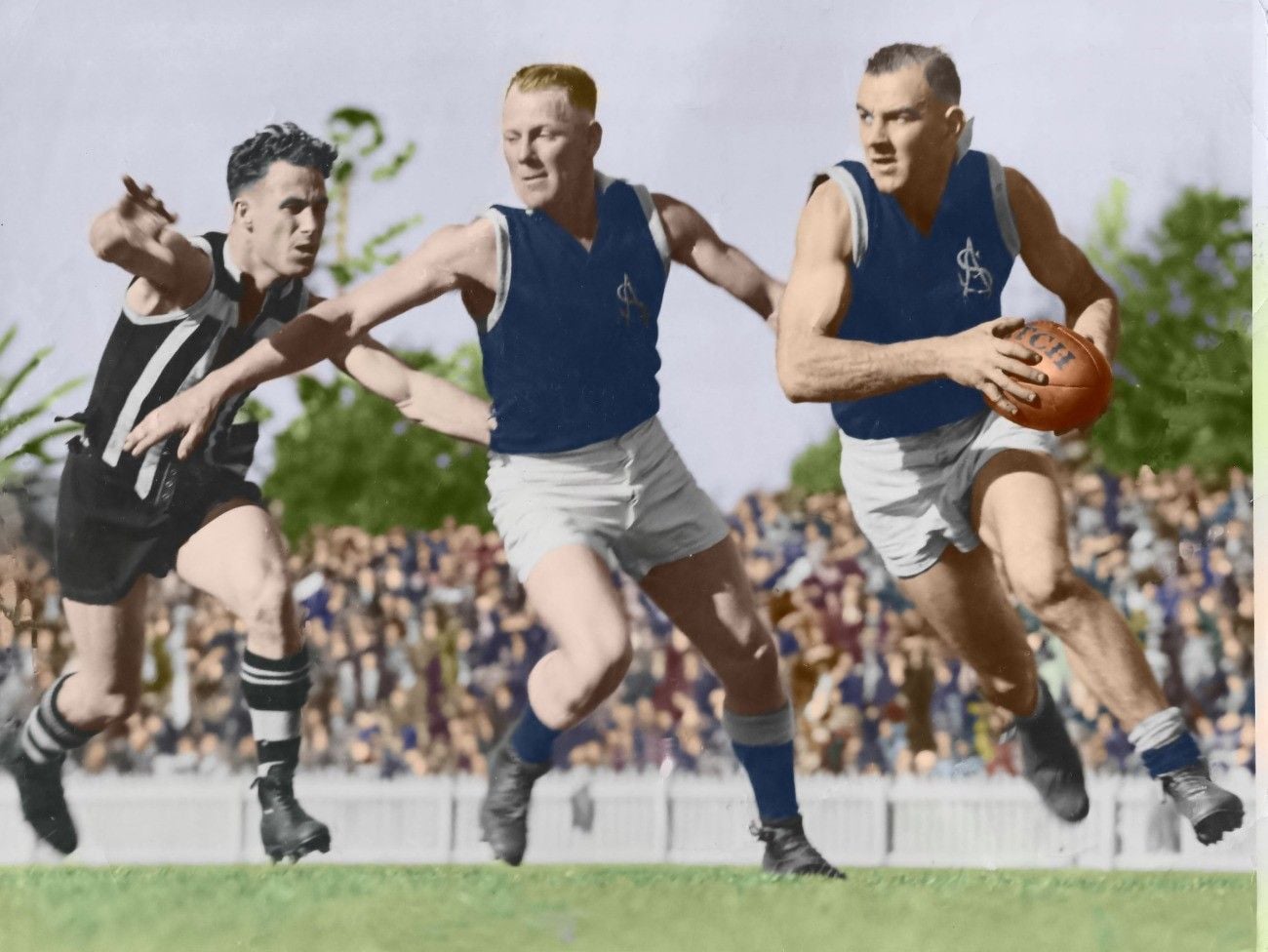
Jack Cockburn, South Adelaide Player #701, in full flight at Adelaide Oval in 1935, the year he won the Magarey Medal. South’s Ed Appleton is shepherding Port’s Bob Quin. Cockburn, from Blyth, was one of several stars South recruited from country regions in the 1930s.
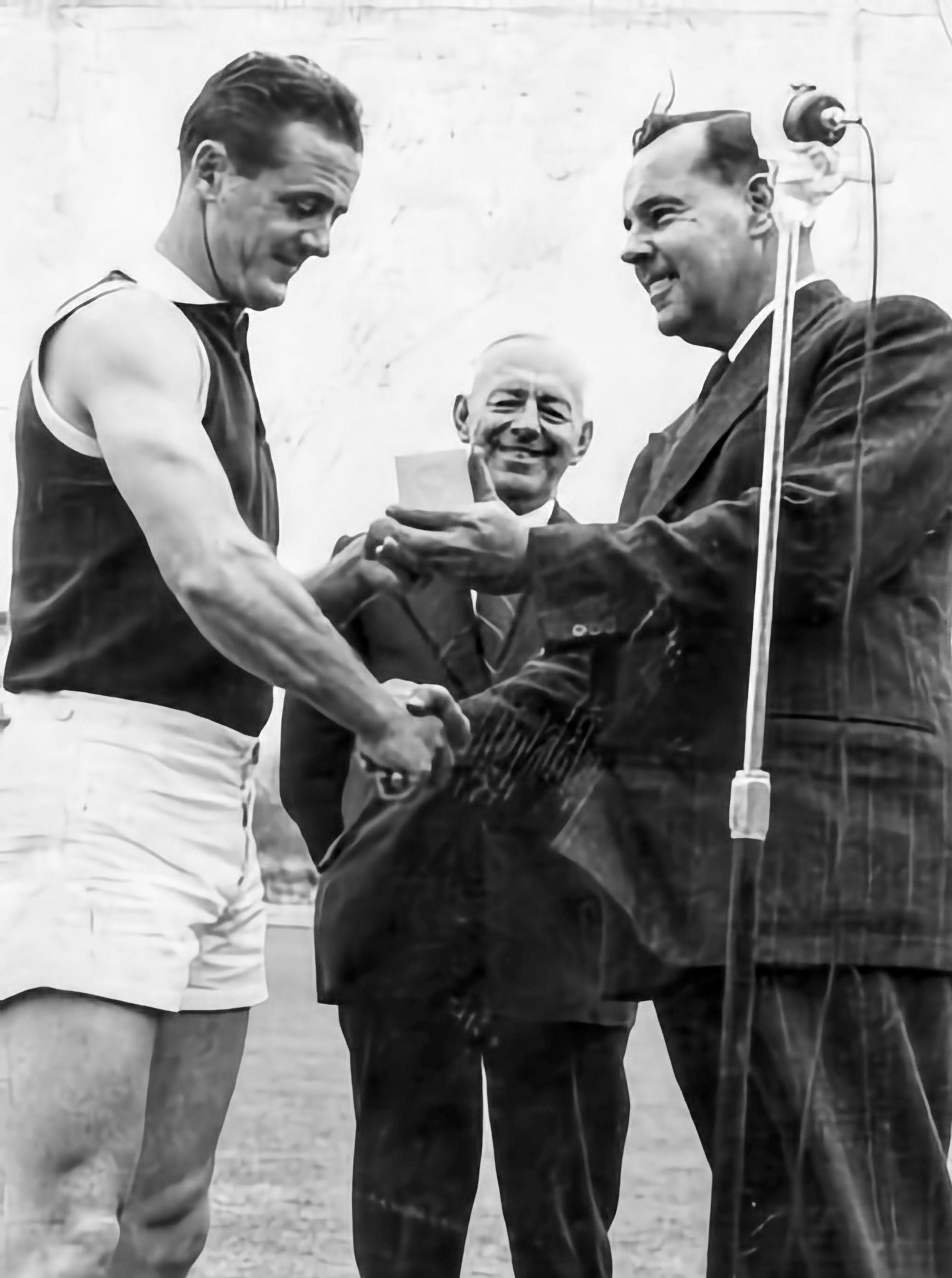
Jim Deane, South Adelaide Player #820, receiving his Magarey Medal in 1953. Deane is a true legend at South Adelaide. He carved out a 21 year career as a player and coach in the SANFL, VFL and country football. The Grandstand and Bar and Bistro (Jimmy Deane’s) at Noarlunga are named after him.
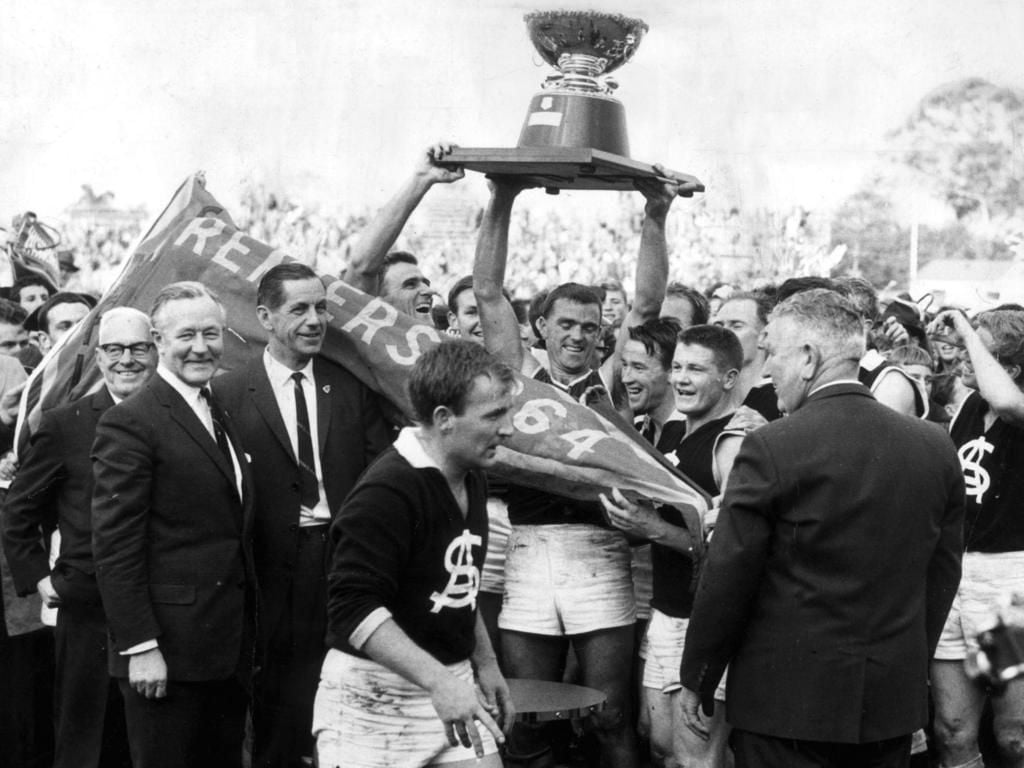
After finishing bottom in 1963, for the 1964 season, South scored the recruit of the century, Neil ‘the King’ Kerley, who came to South as playing coach. Kerley was at the height of his powers as an on-field leader and a coach who could instil self-belief into his men. ‘He could convince players that they were better than they thought they were,’ said Warren Foster. As detailed in Michael Sexton’s book, ‘1964: A Game, A Season, A State’, the whole football community was captivated by the magic Kerley was working at South, and the club’s grand final win over Port inspired the entire state - except maybe Port supporters.
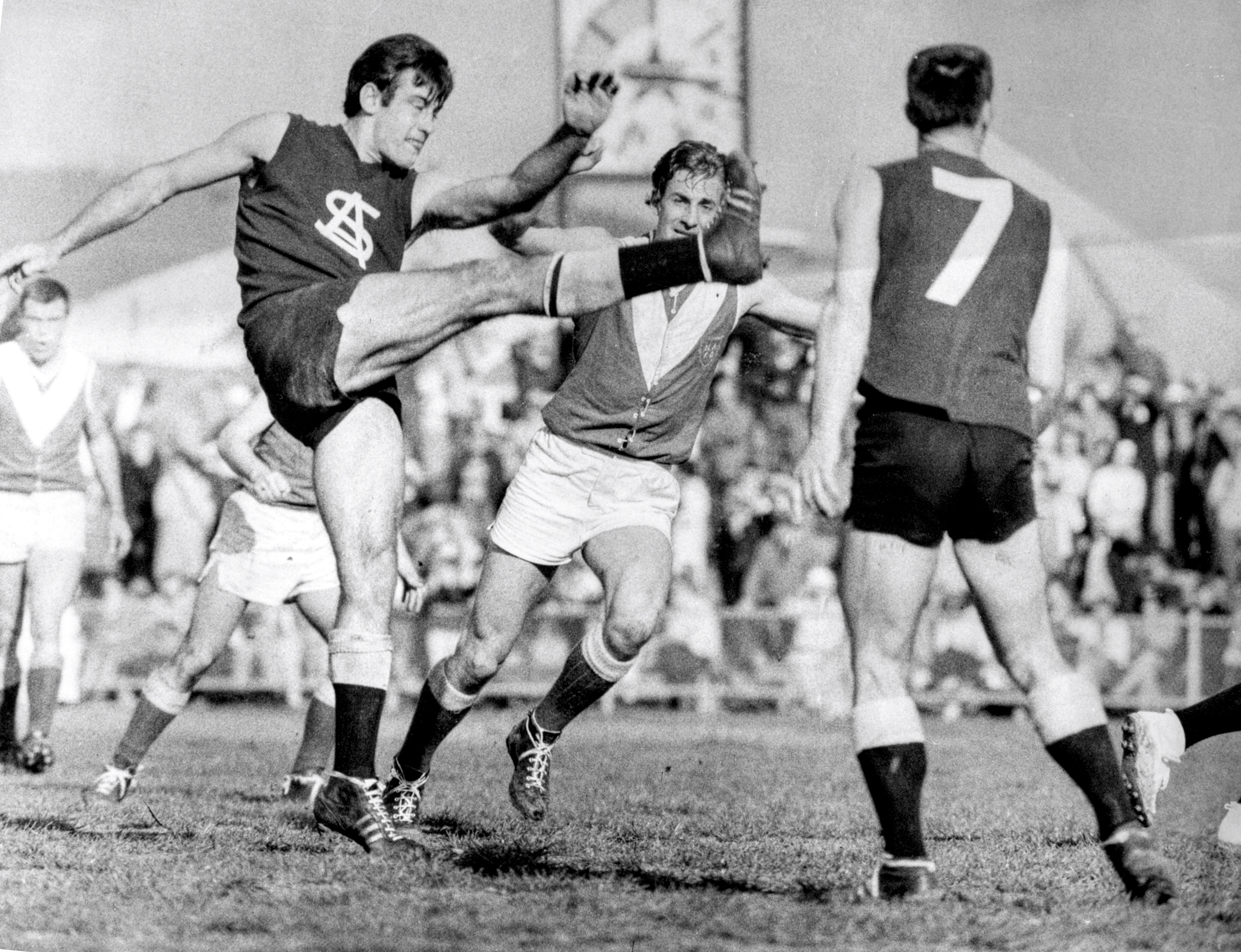
Peter Darley, South Adelaide Player #1087, clears the ball from defence against North in 1968. Although he did not win a Magarey Medal, Darley ranks amongst the very best to ever play for South, winning the Knuckey Cup on a record five occasions in the 1960s. The Function Room at South’s Noarlunga clubrooms is named in his honour.
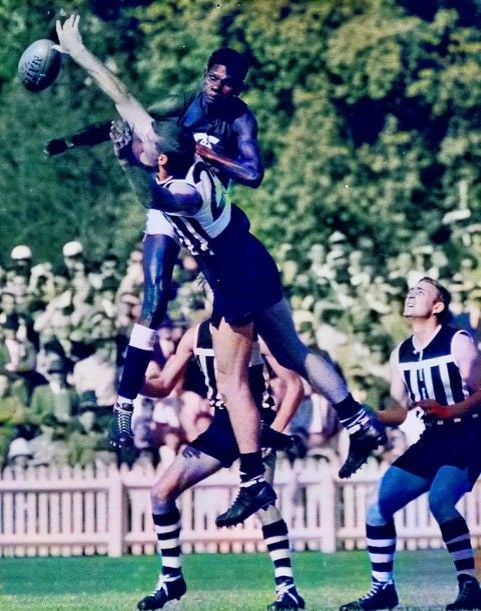
David Kantilla, South Adelaide Player #1059, leaps to effect a spoil against Port at Adelaide Oval. Kantilla, whose tribal name was Amparralamtua, was recruited from the Tiwi Islands and was one of the most naturally gifted players ever to wear the blue and white. He won the Knuckey Cup, South’s Best & Fairest Award, in his first year at the club, 1961, and again in 1962.
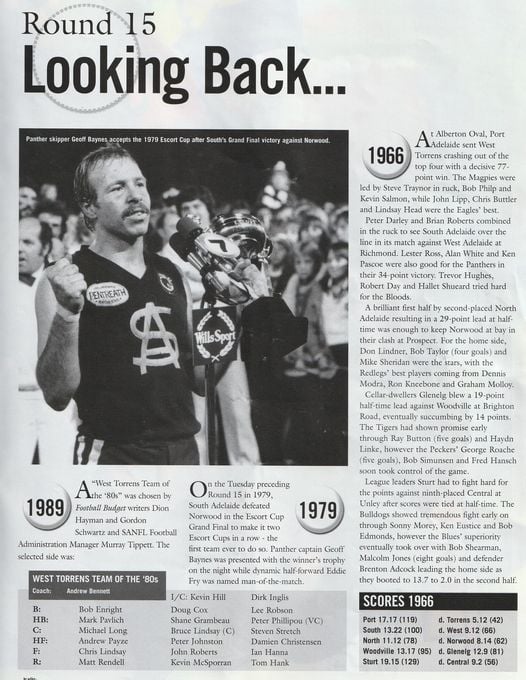
Geoff Baynes, South Adelaide Player #1224, after South’s 1979 Grand Final win in the Escort Cup competition. Baynes captained the club from 1978 to 1981 and won the Knuckey Cup in three consecutive years, 1977, 1978 and 1979. During 2024, 2025 and 2026, he has served as South’s President.
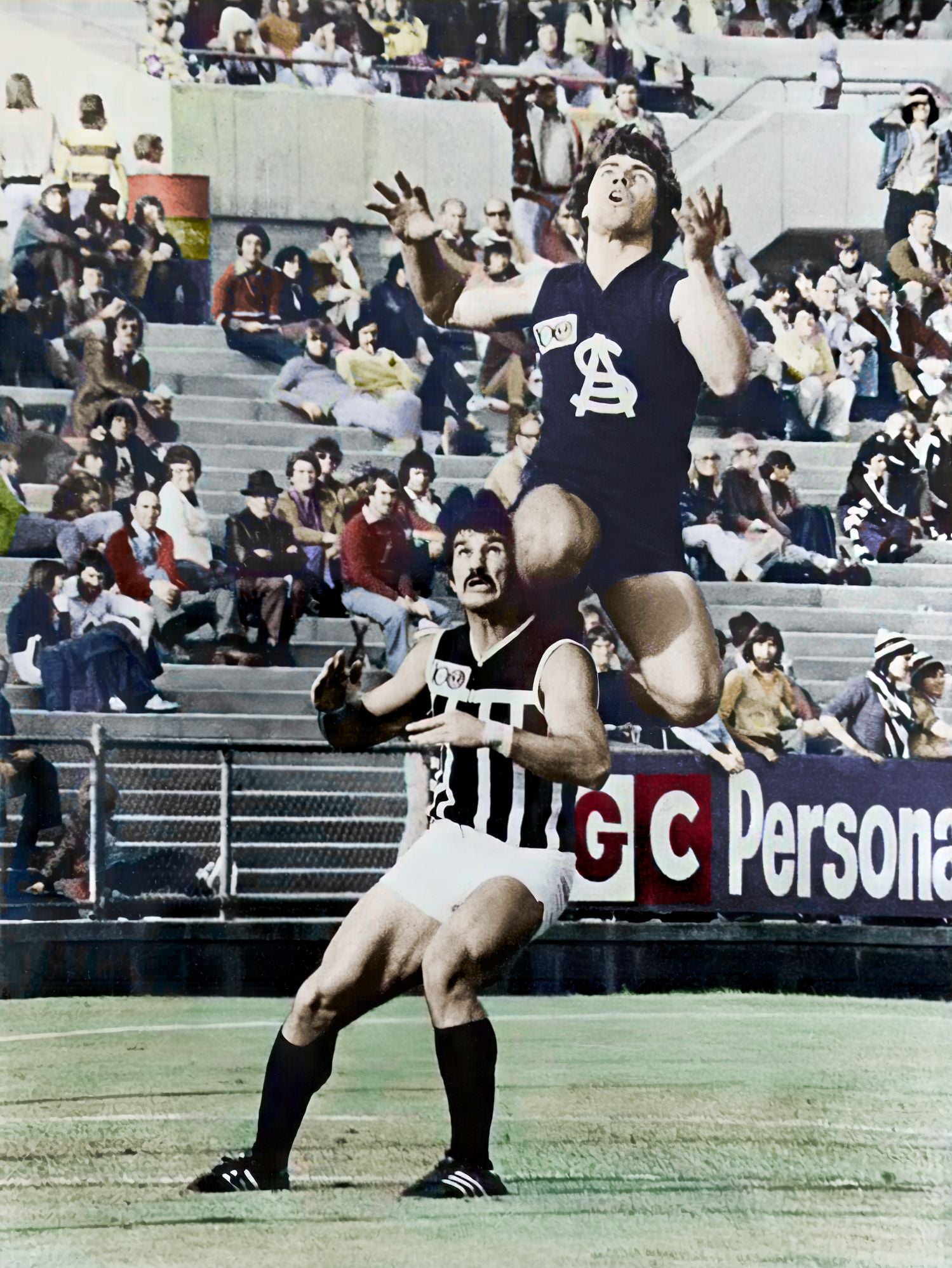
Wayne Slattery, South Player #1240, takes an unforgettable mark over Port’s Carl Fragomeni in 1977. Slattery also kicked the goal. Remarkably, this was Slattery’s debut year at South, and he was sixteen.
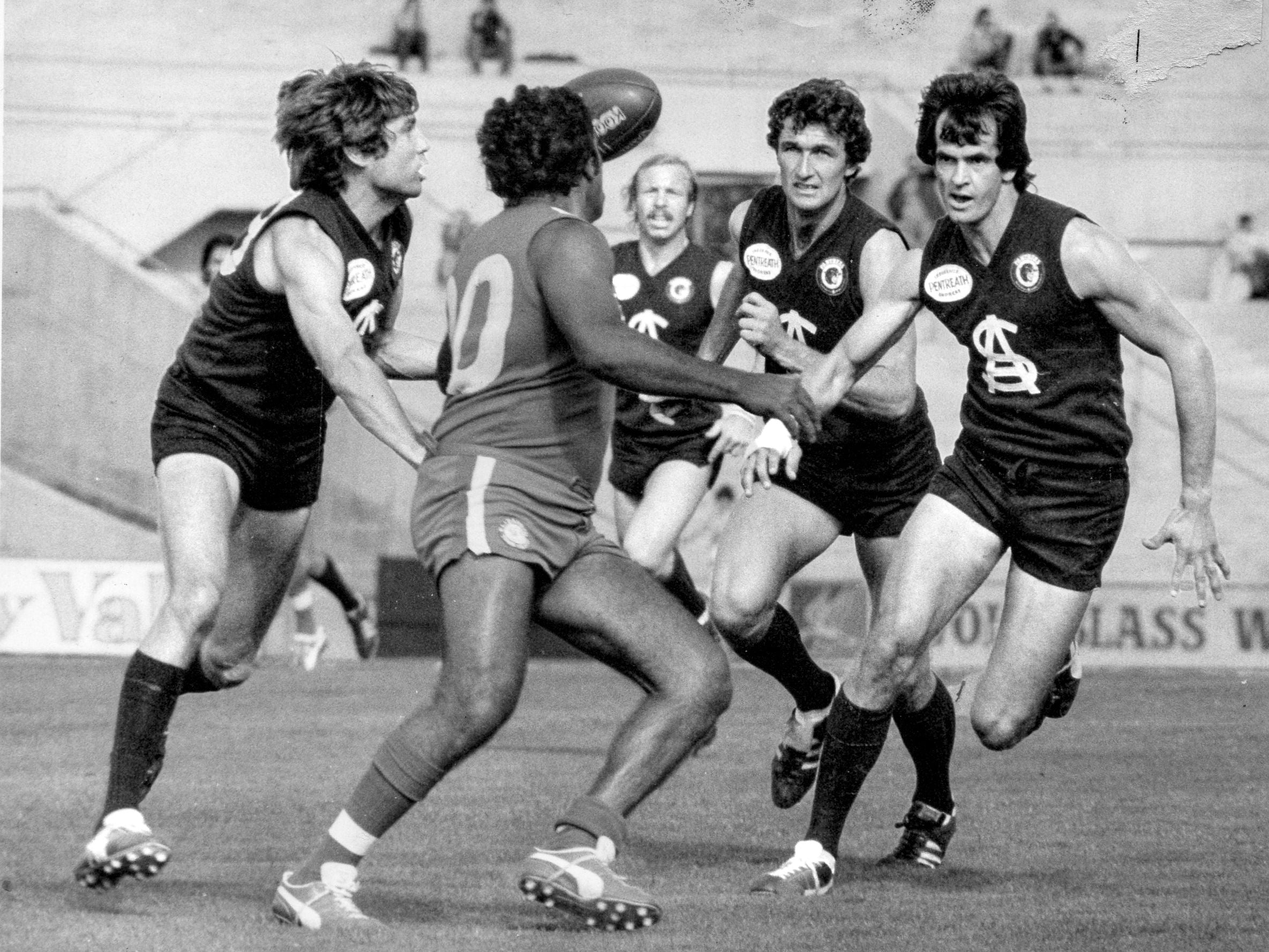
Four of South’s leading players of the late 1970s in action against Centrals at Football Park, left-to-right: Gary Mousley, Player # 1166; Geoff Baynes, Player #1124, Andy Bennett, Player # 1225; and Suart Palmer, Player # 1143. Palmer is also South’s games played record holder, with 337. The Centrals player is Wilbur Wilson.’
Moving further South
South was not without off-field challenges during these decades. Unlike other clubs that had their home ground and clubrooms within their recruiting zone, South played its home games at Adelaide Oval while its recruiting zone was in another district and its headquarters were somewhere else again. This compromised South’s ability to build generational support within a particular district, leading to several financial crises which threatened the club’s existence. Every time, South was saved through the self-sacrifice of its supporters.
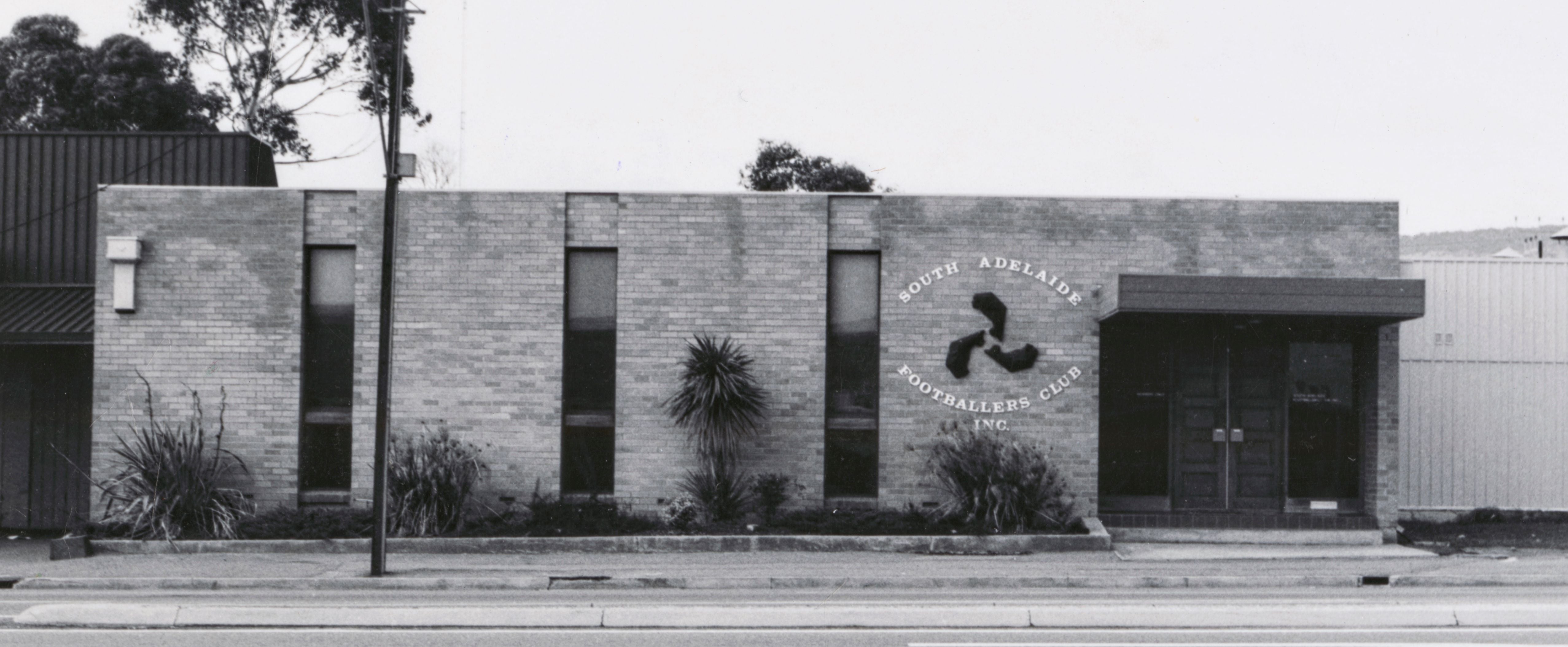
South’s St. Marys clubroom on the corner of South Road and Brookman Avenue in 1976, featuring a mural of three Panther heads. Panther Park was 200 metres away, on Brookman Avenue.
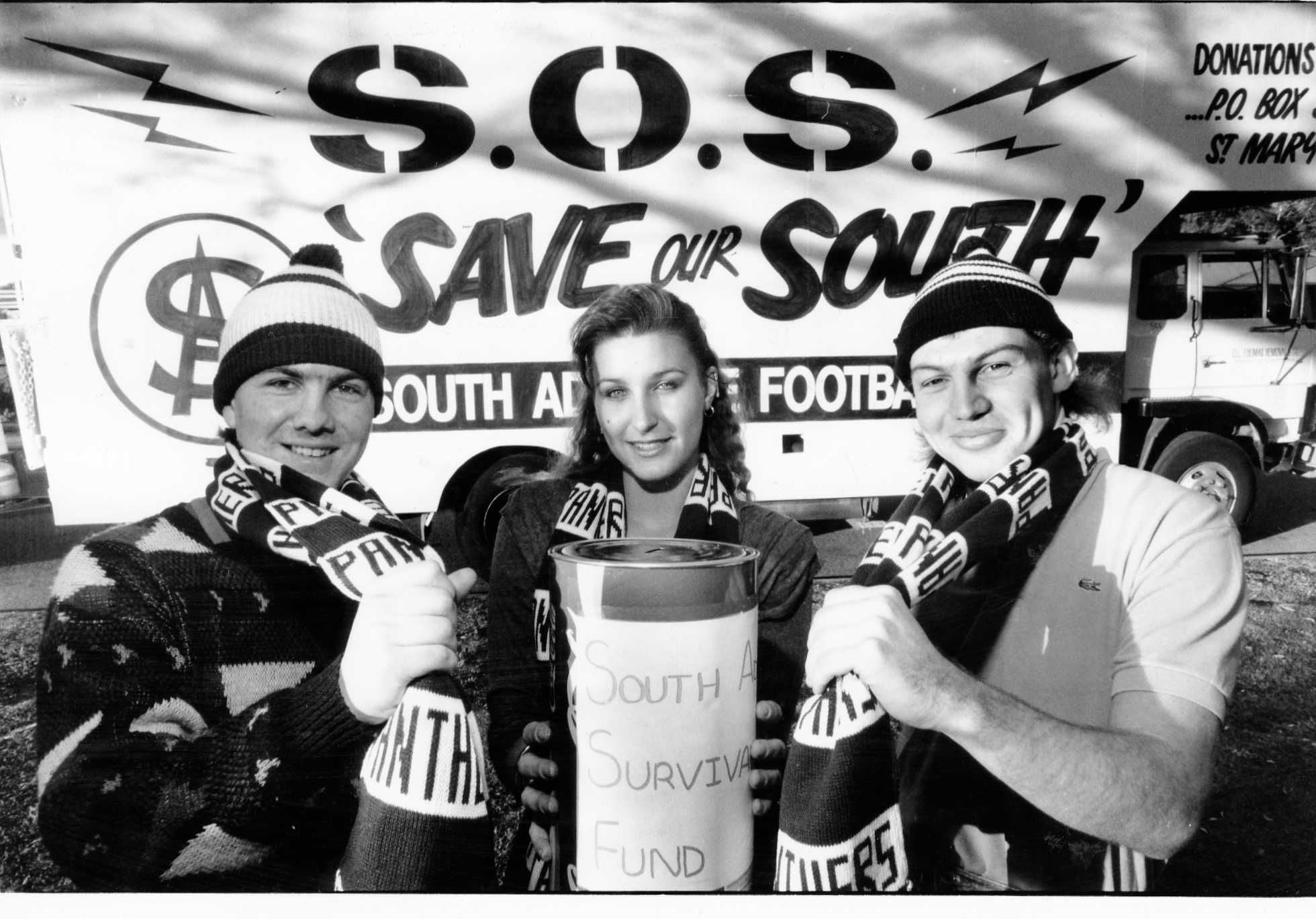
Supporters James Stocker, Debbie Hamlyn and Tom Mills in the Save Our South campaign of 1991.
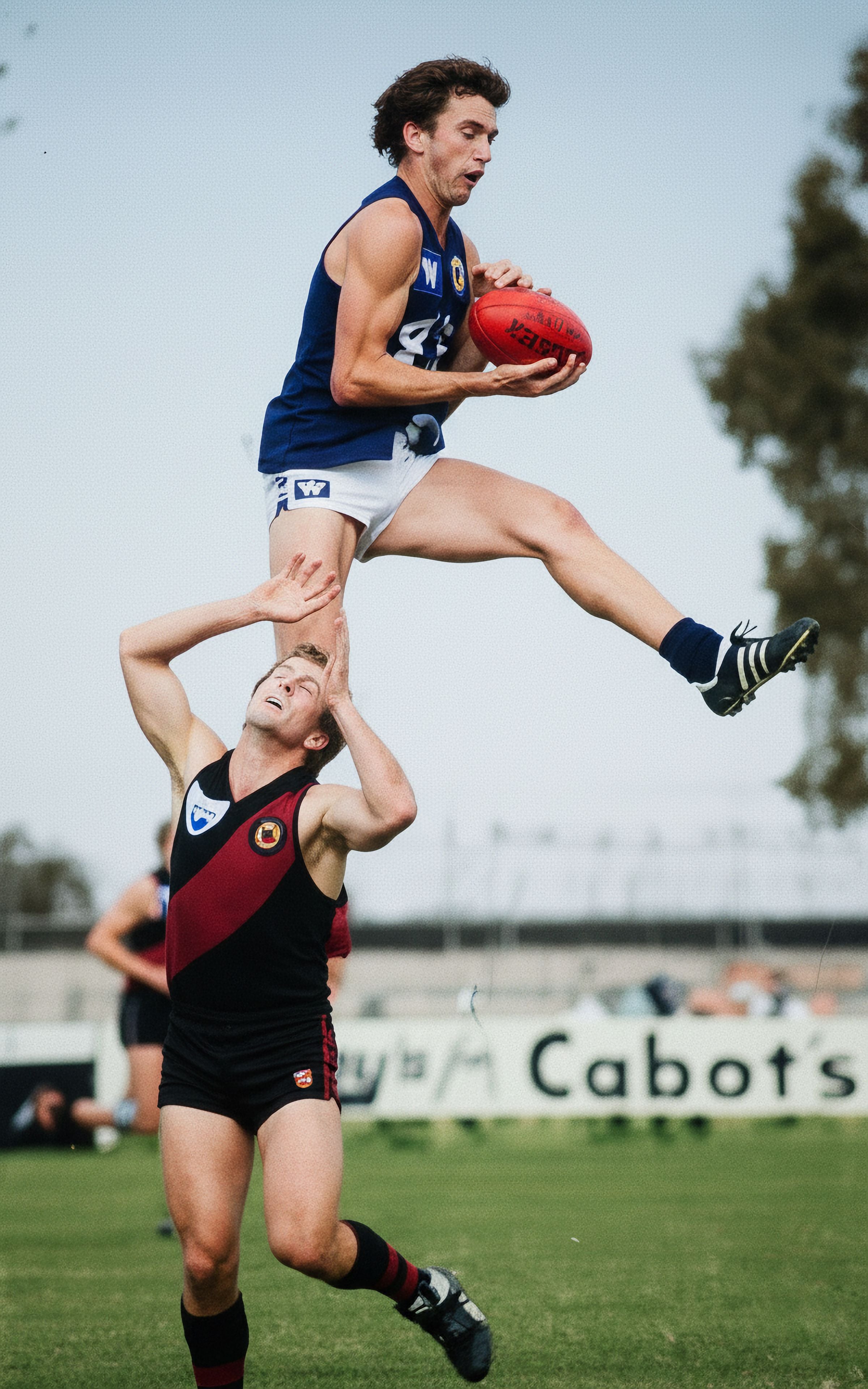
Mark Naley, South Player #1264, marking over West Adelaide’s Bernie Conlin in 1984. Naley won the Magarey Medal in 1991. Apart from being a South Adelaide great, he is remembered for his big-stage performances for South Australia in state of origin matches against Victoria, as well as for his highly successful stint at Carlton from 1987 to 1990, which included Carlton’s 1987 premiership.
Noarlunga
In 1995, South’s home ground and clubrooms were relocated to Noarlunga, and its recruiting zone became the Fleurieu Peninsula. Finally, South had territory to call its own. In the decades since this move, the club’s best finishes have been preliminary final appearances in 2014, 2020, and 2021, the latter two under its longest-serving coach, Jarrad Wright. However, the ongoing lack of premierships has been made up for by the phenomenal performances of South women’s team. Since being admitted to the SANFLW in 2018, South has won four flags and has been the measuring stick for other teams.
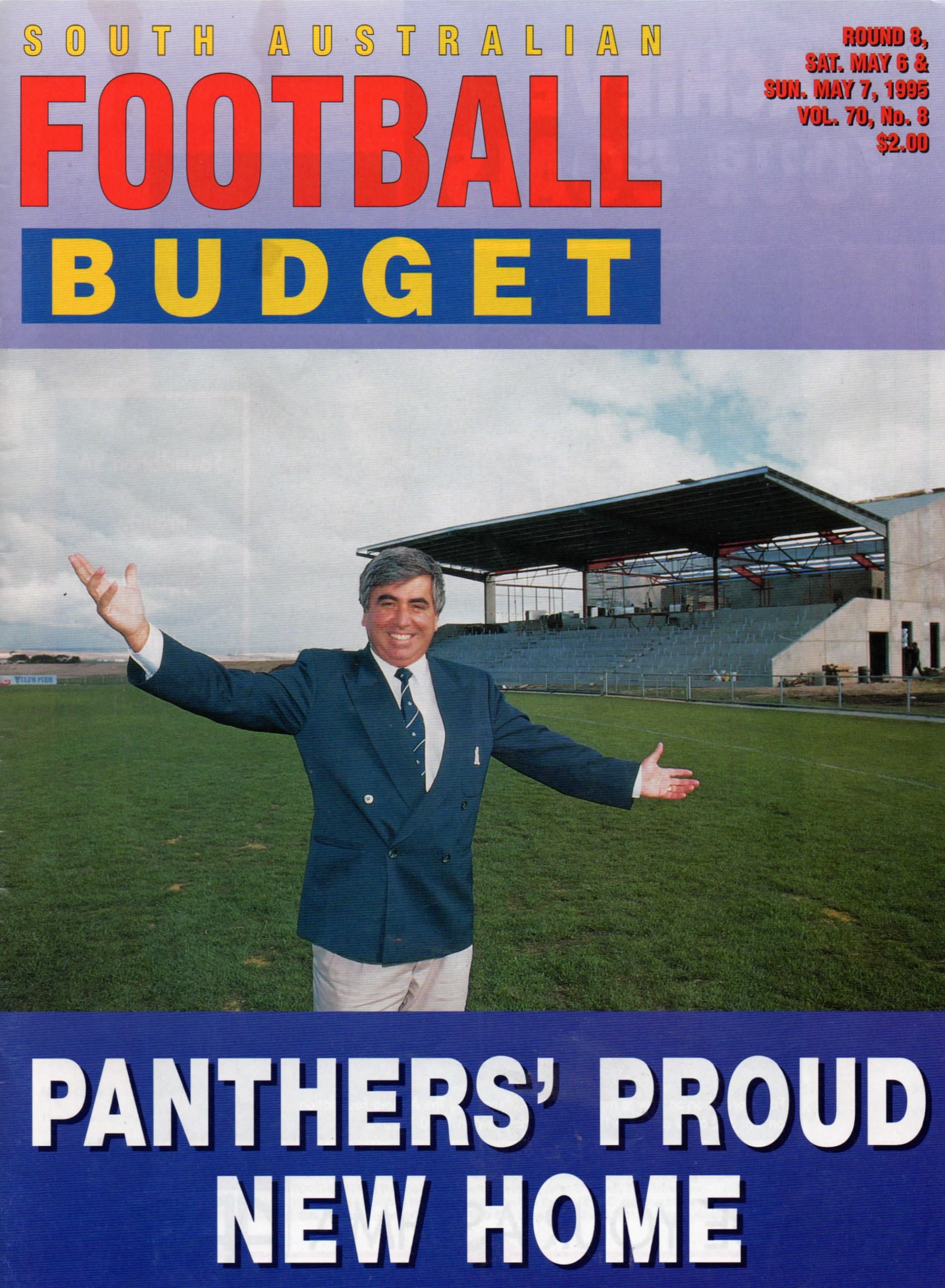
South committeeman Paul Kristoris on the cover of The Football Budget, 6 & 7 May 1995, the weekend of South’s first game at its new Noarlunga home.
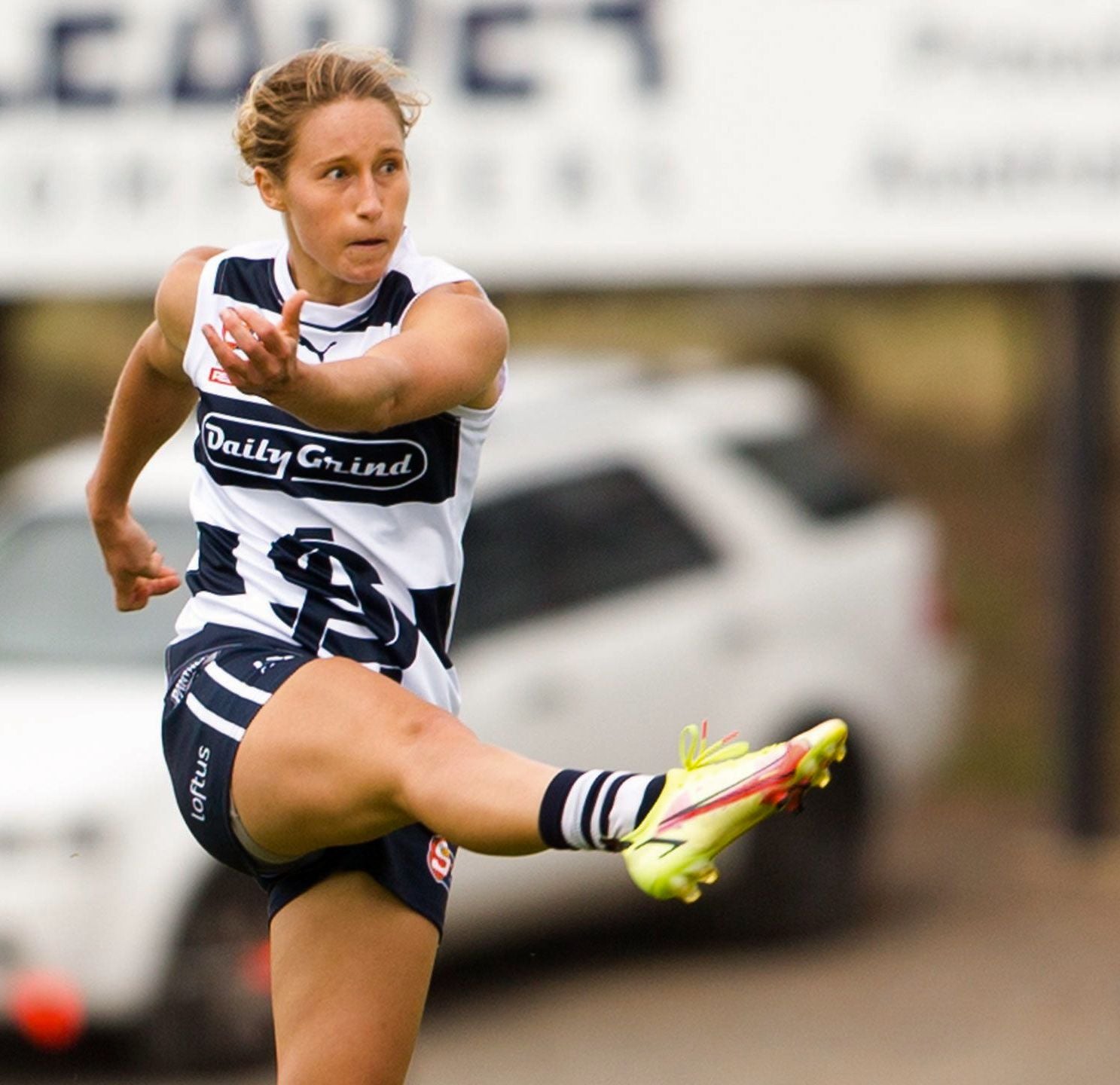
Nikki Neild, Women’s Player #24, in action against Glenelg in 2022. Nield won the SANFL Medal for the Best and Fairest player in the League in 2024. She also won South’s club Best and Fairest Award in 2018 and 2024. Photography by Nick Hook.
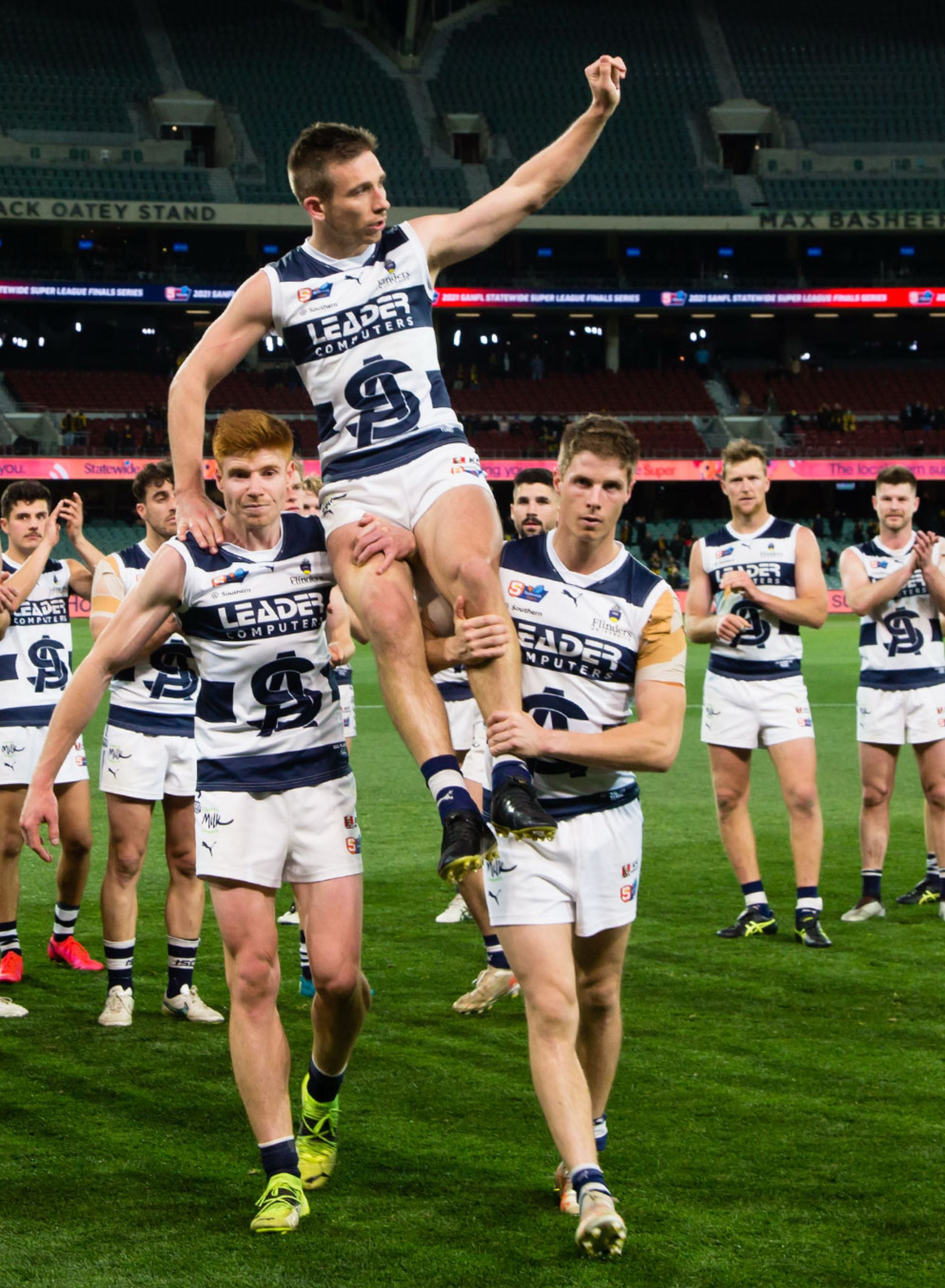
Joel Cross, Player #1671, bring chaired off the ground after his final game for South, the 2021 Preliminary Final. Cross was a two-time Magarey Medallist, in 2012 and 2015, and won the Knuckey Cup on four occasions: 2011, 2015, 2016, and 2019. Photography by Nick Hook.
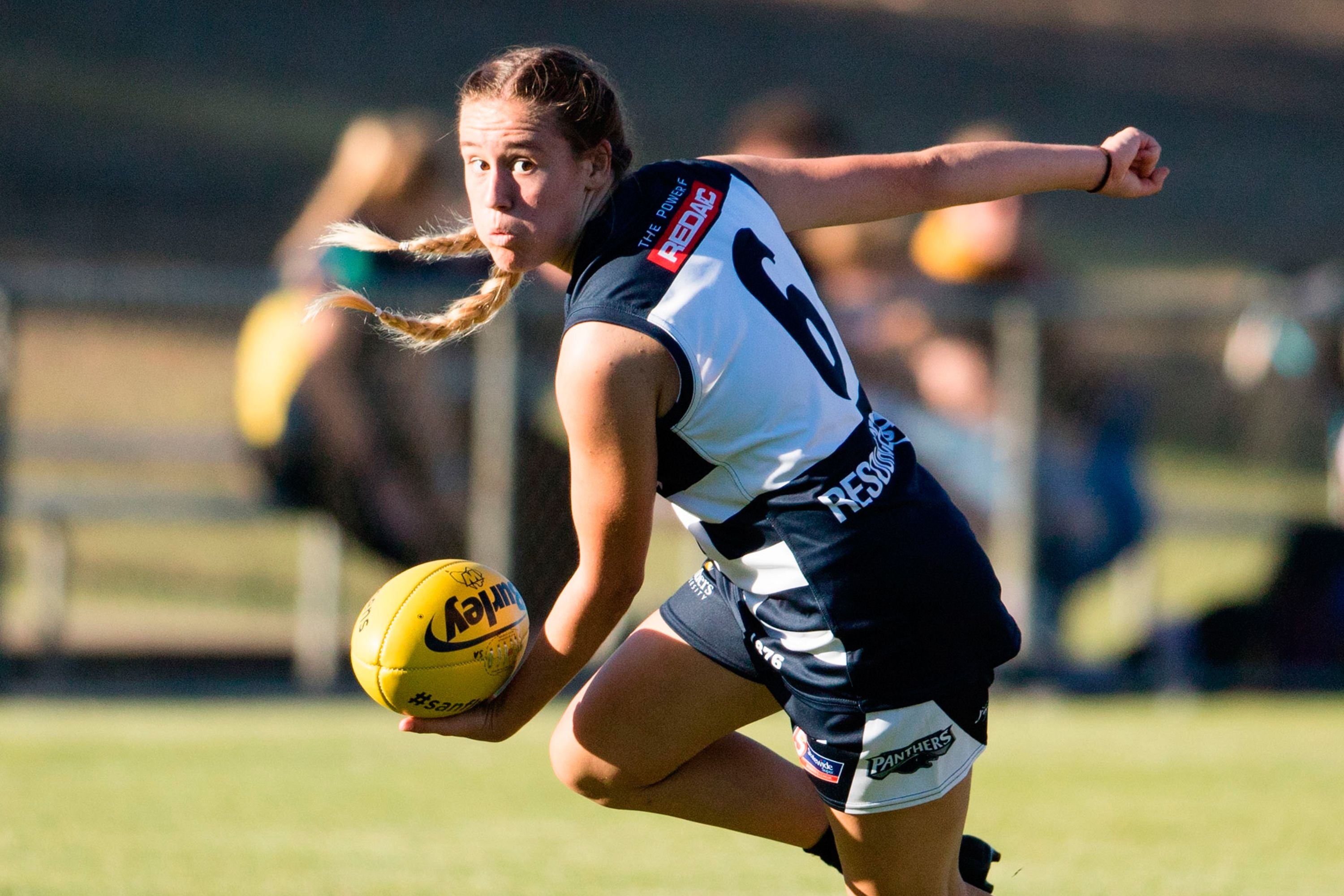
Hannah Munyard, Women’s Player #16, firing off a handpass in 2018. Munyard was drafted by the Western Bulldogs in 2020 before joining the Adelaide Crows in 2021. Photography by Nick Hook.
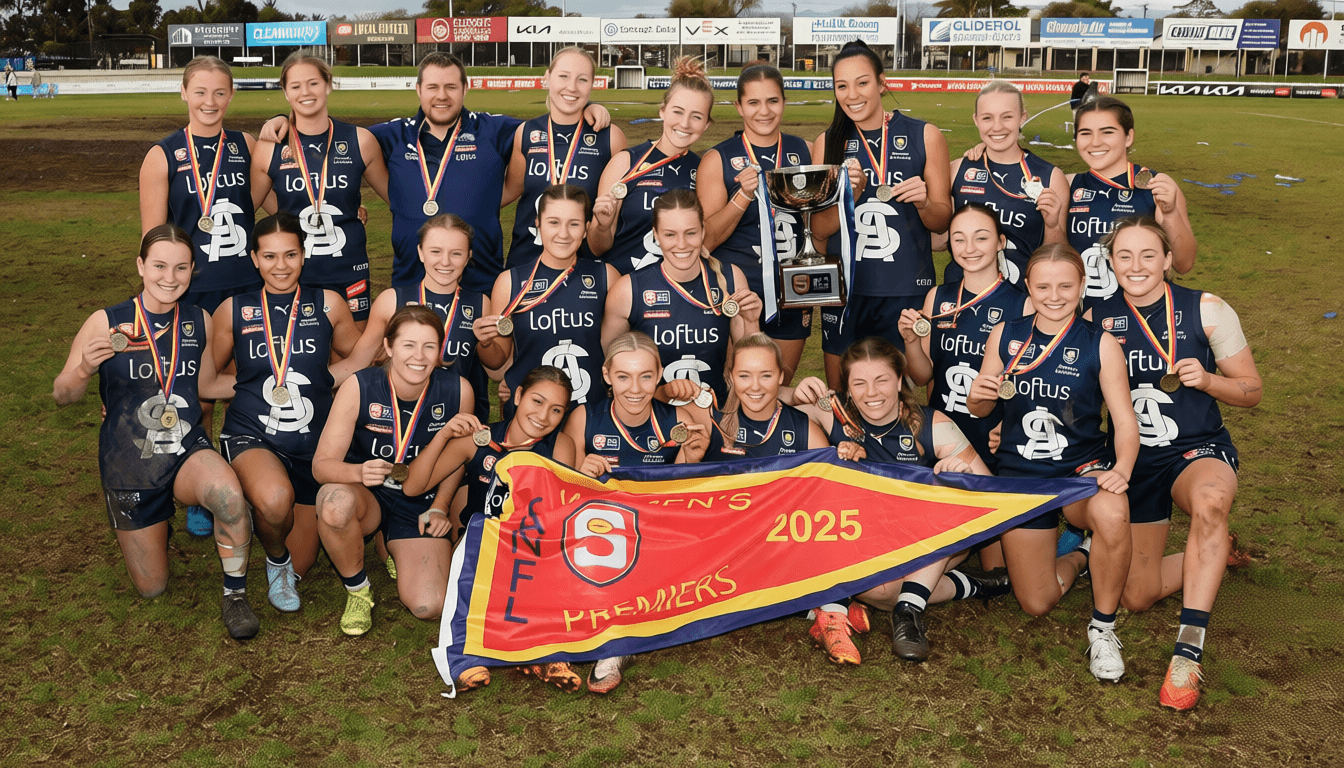
South’s Women’s Premiership team of 2025 following its grand final win over the Eagles. It was South’s fourth premiership in eight years. Photography by Nick Hook.
South Adelaide Champions
Eight South players have earned Magarey Medal honours: Frank Barry (1915); Dan Moriarty (1919, 1920, 1921); Jack Cockburn (1935); Jim Deane (1953, 1957); Mark Naley (1991); Andrew Osborn (1998); Joel Cross (2012, 2015); and Bryce Gibbs (2021). In the SANFLW, the League Best and Fairest Medal was won by Nikki Nield in 2024. Other champions have included Jack ‘Dinny’ Reedman, Jack Tredrea, David Kantilla, Peter Darley, Geoff Baynes, Stuart Palmer, Nick Liddle, Soriah Moon, Jaslynne Smith and Nicole Campbell. Many South players have also been drafted into the AFL, such as Mark Bickley, Nigel Smart, Shane Ellen, Caleb Daniel, Hannah Munyard, Beau McCreery, Jess Waterhouse, Jason Horne-Francis and Indy Tahau.
South Adelaide has worn blue-and-white from its beginning and is the only current SANFL club to have competed in every season since 1877.